
Greetings
The third Tuesday is an elusive sort of day. Some months it just strolls in, seemingly in no hurry, arriving as late as the 21st. Other times (like July 2025) it rushes in and arrives nearly a week earlier on the 15th.
You would think a seasoned newsletter editor would prepare for the early date – and I did. I started this edition in June, and this time last week all I had to do was to finish this greeting.
Then, while weed eating, I ran into a patch of poison ivy. For the past week I’ve baptized my legs with calamine lotion and Cortizone-10 and consumed a box of children’s Benadryl. But no matter how hard I tried, I couldn’t concentrate enough to compose anything semi-interesting for the newsletter.
Last night, while trying to ignore the itch and go to sleep, I realized I should bare my soul (or at least my legs) and tell you all why the newsletter is late. Anyhow, that’s my story and I’m sticking to it.
Now let’s get started with SPLINTERS.
June Program
Tony Murphy gave an informative program on building a Philip Morley barstool. See the June minutes for a more detailed version of the program.
July Program
Brenda Zaccaro will present a program on scroll sawing.
SAVE THE DATE!
TVWW’s 40th Anniversary Banquet Celebration is set for Friday, Sep 19th at the Manchester Coffee County Conference Center with Social time at 5:30 PM and dinner/program at 6. Tickets for the 3-course dinner will be $20/person. The Club will pay the rest of the meal cost and all facility expenses. Tickets will be available at the monthly meetings through August. Please order your tickets so we can order the correct number of meals.
Also, the 40th Anniversary t-shirts are ready to order. Info available at the July meeting.
June Show & Tell
Here are the items shown in the June meeting –
Jim Jolliffe showed historical slides of a cherry display case made by Henry and Lloyd with donated cherry wood from Tom Cowan. The slides are a subset of those posted on the club webpage.
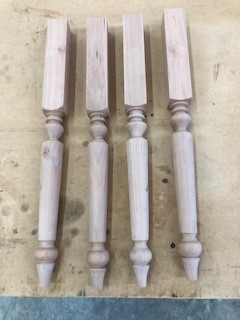
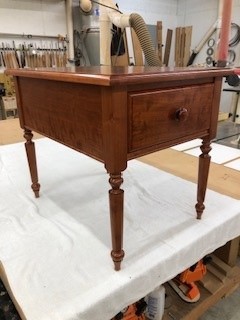
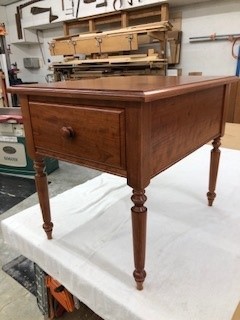
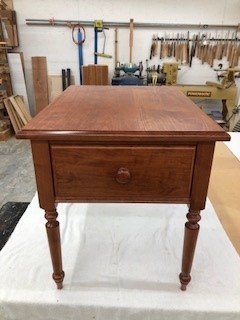
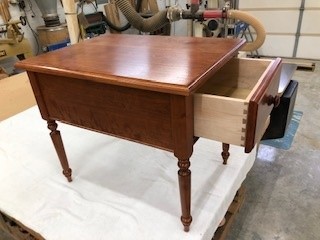
Matt Brothers showed a side table project he made out of cherry with a maple-lined drawer. The legs were turned by Bill Guffey. Matt used a brown mahogany stain with a semi-gloss Lenmar lacquer finish that he got from Hoover Paint. (Pic1, Pic2, Pic3, Pic4)
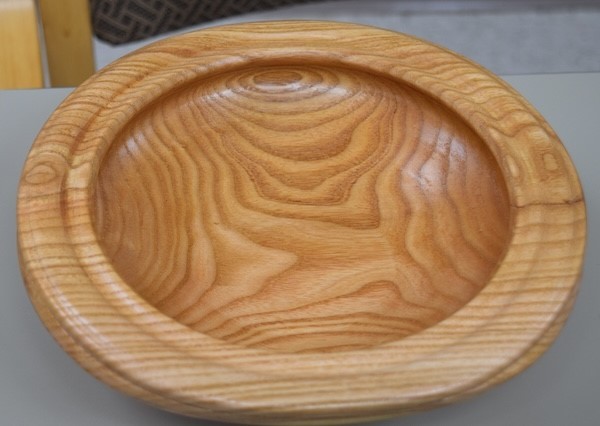
Bob Truesdale showed a bowl he made from an irregular slab of coffee wood. He used 3 centers while turning the bowl and cleaned up both sides so that the edges would not get too thin. He used rattle-can lacquer for the finish. Bob burned a line around the bowl using a wire but had two flats that the wire did not burn so he cut a line on the flats with a saw and went back to burn those lines. It is often suggested to use copper wire to burn the lines, but Bob finds that picture frame wire works well for this. There was also a suggestion from the club to use a guitar string for burning lines in bowls.
Gary Runyon showed two needle boxes that he made. One was made of hickory, and it had a flared end so that the lid snaps on and off tightly with a nice “pop” sound. The hickory needle box was finished with Doctor’s wood-turning finish.
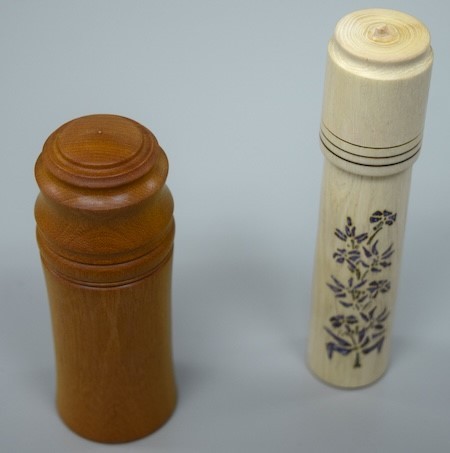
Gary also showed a needle box he made from elm. This one had a threaded lid and was stained. Gary also brought wood 90 degree squares he made for club members to take home.
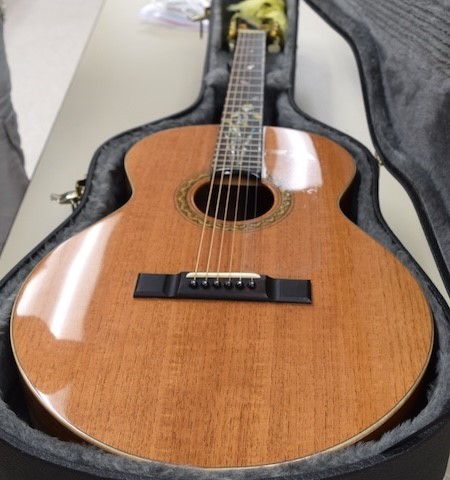
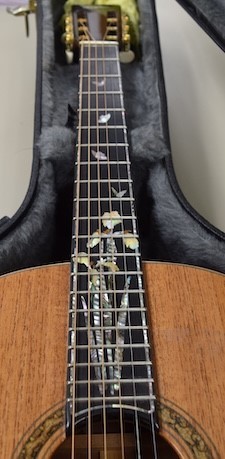
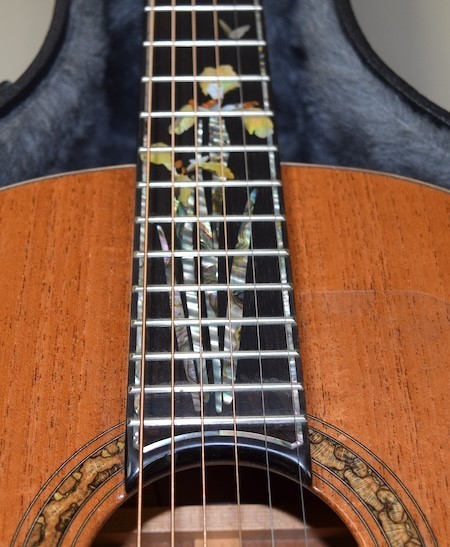
Geoff Roehm brought a “cigar box” guitar he made out of Spanish Cedar which had beautiful inlay that he cut with his CNC machine on the fret board. The truss rod on this guitar is adjusted through the peg head. Goeff worked on this guitar on and off for three or four years and said it is one of the best sounding guitars he has ever made. Geoff said there are several myths in guitar making including that a Stradivarius finish or using Tone Wood will give the guitar a good sound. He said that any structurally sound and stable wood can make a good instrument. (Pic1, Pic2, Pic3)
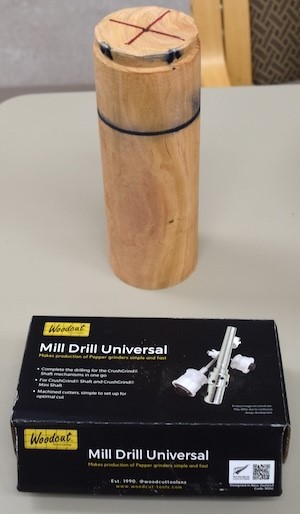
Larry Wendland brought billet used for making a pepper mill. He showed a mill cutter with an adjustable, multiple cutter head function that he found online. The two cutters will cut both seats in 1 pass and the cutters are adjustable so they will work for any mill. This mill cutter can save considerable time when making pepper mills. Pic
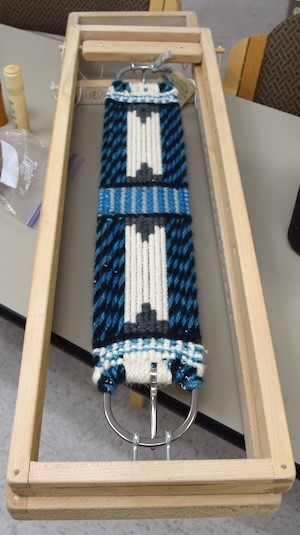
Richard Gulley showed a weaving frame he made out of sycamore. He used a CNC machine to cut the holes at regular intervals. The large version of the weaving frame is about 60 inches long.
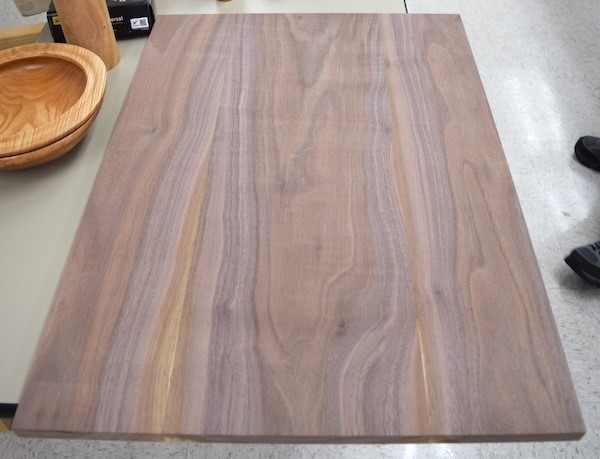
John Lovett from Fall Mills brought a slab of walnut he is using for a sewing machine stand top. The walnut slab was made from 3 pieces and assembled with help from Gary Runyon. John is looking for a someone with a router bit he can use to finish the top.
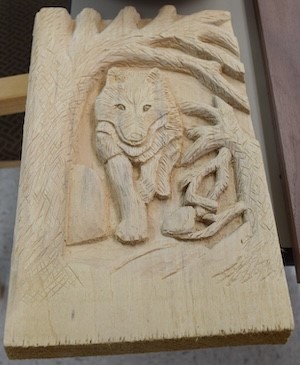
Dan Buholzer showed a wolf in trees relief carving he is working on out of basswood. The carving is still in progress.
Carver’s Corner
The Splinter Carvers continue to meet first and third Saturdays of the month from 8:30 am to 10:30 am (whether Jim’s there or not). The shop is located at 201 Jolliffe Acres Ln, Tullahoma. Tools and wood are available at the meetings, just bring yourself and try your hand at carving!
CCA Charter Member Rich Wetherbee Seminar is scheduled Sat-Sun October 18th-19th at Jim Jolliffe’s shop. The club is offering a 25% scholarship and the Splinter Carvers are providing another 25% scholarship to the Oct 18-19 Rich Wetherbee carving seminar for TVW members who would like to attend. That reduces the price to $85/carver plus the cost of any roughouts. Lunch will be provided both days. The seminar will run from 9 AM -4 PM each day.
Internet Links of Interest
If you see interesting websites or videos you think woodworkers would enjoy, send them along to me.
Sweeping Up
The following would be true if it weren’t for the heat.
My daughter would probably appreciate this one –

Watch out for SPLINTERS!
Submissions to the newsletter are more than welcomed. Send funnies, tips, or other content that may be of interest to our membership, and you may see it in a future edition of SPLINTERS.