
Meeting March 17th, 2026
Call to Order
The meeting was called to order at 6:30 PM by President Jim Jolliffe.
Visitors
Jeremiah Chamberlin visiting from Nashville, TN.
Announcements
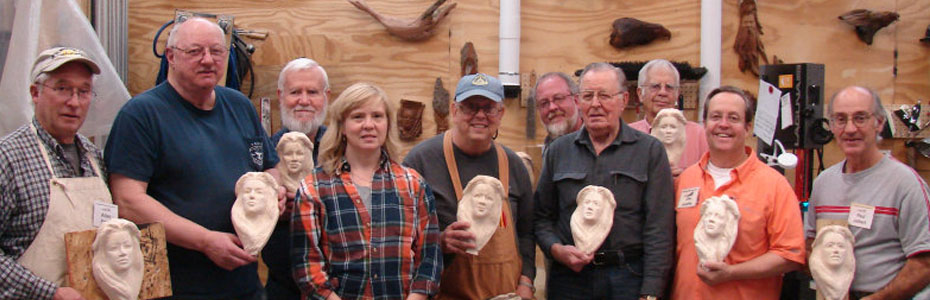
A Lion Bust Carving Seminar led by David Sharp will be held on Saturdays, April 18th and April 25th, from 8:30 AM to 3:30 PM. The cost is $95 per person and includes instruction, carving blank and lunch both days. Contact Jim Jolliffe at jim.jolliffe@icloud.com or Steve Shores at Shores5580@gmail.com.
The Cowan Memorial Turning Bee was reported as a great success, featuring 5 mentors and 17 students. Special thanks to Bee Chairman Larry Wendland, Bee Chef, Sherry Wendland and mentors Vince Zaccardi, Doyle McConnell, Chuck Taylor, Karen Browning and Dennis Finney.
40th Anniversary T-shirts are still available for $25 each.
The Andy Rigney Cabinet Shop sale is set for Saturday, March 28th, from 8:00 AM to 12:00 PM at Estill Springs Storage located at 205 Circle Drive, Estill Springs, TN. The sale is located behind Samples Diner and the Estill Springs Police Station. Members are encouraged to bring cash and make offers.
Show and Tell
Gary Runyon showed a Narex scraper, noting its effectiveness for removing glue and its affordable $7–$8 price point at Wood Craft.
Vince Zaccardi presented several bowls, including an “ovalized” piece he salvaged by gluing a plate to the bottom for easier turning, a cherry bowl with an oil finish, and an ash bowl started from a blank provided by Jim Jolliffe.
Visitor Jeremiah Chamberlin shared a poplar relief carving he began during a class with Austin Chandler.
Gary Bennett showed a laminated mahogany bowl turned at 1500 RPM using carbide bits and finished with polyurethane. He notably used a lathe index and drill press to place 12 forstner-bit holes into the blank before turning. Gary also displayed a maple bowl with an inner-facing lip and tung oil finish, turned from a blank acquired at a previous turning bee.
Mickey Knowles presented a white poplar bowl finished with sanding sealer and lacquer, choosing to leave a small natural nick in the wood. Mickey also turned three walnut knots into bowls; despite the knots causing significant vibration on the lathe, he successfully cut off the tops, hollowed the bowls, and glued the tops back on.
Ralph Elmore displayed several pine rubber band guns made with a scroll saw, including lever-action and fully automatic models, all left without a finish.
Program
Jim Jolliffe presented the evening’s program: “Design and Carve a Native American Warrior,” based on an Air Force Squadron mascot for client Steve “Thirsty” Smith. Jim discussed his research and his experience carving the piece out of butternut, a wood he noted was more plentiful twenty years ago. He carved the wood while it was wet, noting the challenge of the lightly sticky sap. To achieve the final look, Jim used a Dremel to hollow the pupils and limited wood-burning to the eyes. Due to grain direction and breakage, the feathers were carved from sapwood and mounted to the head in a slot behind the gorget. The mascot’s pony tail was also carved separately due to grain direction and attached via a mortise and tenon joint.
The bust was sanded with 2″ x 2″ Scotch-Brite 7440 heavy weight pads mounted on a Dremel mandrel and finished with three coats of mineral oil, five coats of semi-gloss rattle-can lacquer, and a matte fixative spray. To antique the piece, Jim applied a custom blend of Watco Satin Liquid Wax (3 parts natural, 1 part dark), which he applied liberally with a brush and then buffed with a drill-mounted horsehair brush. Jim highlighted specific design choices, such as enlarging the bear teeth molars on the necklace to emphasize the 5 Maltese crosses depicting WW I kills. He also discussed the head length to width ratio changes caused by driving the chin down to open the mouth.
He addressed several challenges, including a crack that formed at the end of the project when his shop lost heat; he repaired this and other “punky” areas with wood putty, which he then carved and painted to match. To slow the butternut drying process during the six-week process, Jim covered the bust between sessions with a garbage bag, reversing the storage bag at the end of each session. The presentation concluded with a discussion on his free-hand acrylic paint work and his use of CA glue to stabilize potential cracks.
The meeting concluded at 8:00 PM with a with a reminder that the next meeting is scheduled for April 21st at 6:30 PM.