
Meeting February 7, 2026
Call to Order: 6:30 PM by Jim Jolliffe
Visitors: Norman Buck (McMinnville, TN)
Announcements
Monthly Programs: There is currently an opening for a monthly program in October.
Cowan Memorial Turning Bee: Saturday, February 21, from 8:00 AM to 2:00 PM at the Decherd Church of the Nazarene. Cost to attend is $10.
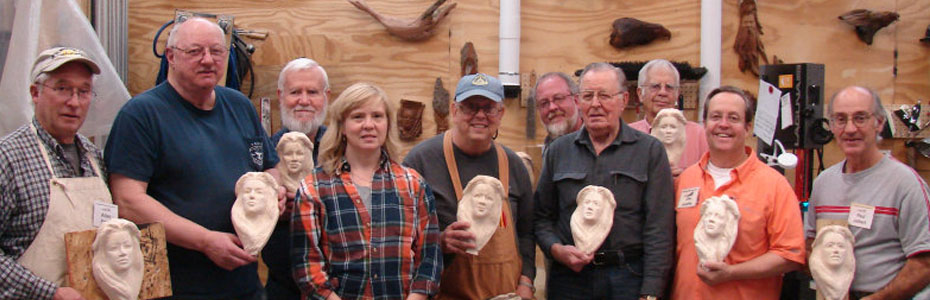
Lion Bust Carving Seminar with David Sharp: Scheduled for Saturday, April 11, and Saturday, April 18, from 8:30 AM to 3:30 PM at Jim Joliffe’s shop. The $95 cost covers two days of instruction, the blank, and lunch.
Andy Rigney Cabinet Shop Sale: Saturday, March 28, at Estill Springs Storage from 8:00 AM to 12:00 PM.
Other Business
Donations: Gary Runyon provided magazines to give away. John at Falls Mill is looking for corded tool donations for a wood apprentice; please bring any donations to the upcoming Turning Bee.
Future Events: There is club interest in scheduling another turning bee later in the year.
Show and Tell
Mickey Knowles: Showed a turned hickory bowl. He used a faceplate for the start, retained a natural mushroom feature in the bottom, and kept the natural bark on the exterior. Finished with sanding sealer and lacquer.
Karen Browning: Shared a wooden moose and a crab with movable legs to provide project ideas. She also displayed a wooden burnisher made by Doyle McConnell.
Vince Zaccardi: Presented a maple bowl with an oil finish. He shared a second piece that began wobbling mid-turn due to a separating tenon; he corrected this by gluing a new piece of wood and veneer to the bottom. Vince also shared results of a finish experiment on cherry using linseed oil, Danish oil, and walnut oil. While surface appearances were similar, the linseed and walnut oils soaked through the wood while the Danish oil did not.
Michael and Brenda Zuccaro: Showed a walnut box with an ambrosia maple top, featuring a tray with a maple hinge and a French polish finish. Michael also presented a bread-proofing box featuring a removable splined bottom, splayed tapers, and dovetails.
Brenda Zuccaro: Showed two small intarsia butterflies made from walnut, cherry, and maple, finished with linseed oil and lacquer.
Michael Zuccaro: Displayed a cherry tray with splayed sides and a cherry table featuring bent sides, mortise and tenon joinery, and tapered legs.
Jeff Rhoem: Shared several highly detailed CNC and inlay projects:
A butterfly undergoing post-inlay CNC work to be filled with epoxy (using a 0.01″ bit).
Guitar components including Brazilian rosewood bridges, necks (machined on their sides to allow for undercuts), and a 12-string guitar fingerboard.
Intricate inlays featuring Art Nouveau designs, “Beardsley Borders,” and a Chinese Iris. Materials used included mother of pearl, abalone, chittum, dyed walnut, and reconstituted stone.
A custom vacuum clamp with a ball joint and rubber gasket used to securely hold guitar bodies during construction.
Jesse Luke Potter: Showed his first carved spoon, made from cedar. He roughed it out on a bandsaw before hand-carving and sanding; the piece remains unfinished.
Program: Card Scraper and Flat Chisel Sharpening
Presenter: Gary Runyon
Card Scrapers:
Gary explained that scrapers are finishing tools used to create a burr. He demonstrated smoothing the edge with a file followed by a 3000-grit diamond stone with Hone-Rite concentrate (to prevent rust). He uses a #10 Optivisor for improved vision and a Micarta block to keep the scraper perpendicular to the stone. Key tips included:
Remove the side bevel using a 1000-grit stone and a magnetic holder with shim stock.
Apply Camellia oil to the edges.
Burnish with carbide or hardened steel to create the burr, then turn the burr up at approximately 5 degrees.
Use a flat magnet with a rubber backing to protect fingers from the heat generated during use.
Chisels:
Gary demonstrated flattening the back to a mirror polish and grinding a hollow across the top. He uses a progression of 1000, 4000, and 16,000-grit stones.
Establish a primary bevel on the convex edge.
Hold the chisel at 45 degrees on the water stones.
Check for “sparkles” on the back; their presence indicates the edge is not yet perfectly sharp. A strop can be used for the final honing.
Adjournment: 8:00 PM
Next Meeting: March 17 at 6:30 PM